
Multi-SKU Cosmetic Labels: Control Artwork Versions
How should buyers specify multi-SKU cosmetic labels?
Use one controlled matrix that connects each ordered SKU to its approved artwork file, language version, quantity and delivery identifier. Ask the supplier to quote and acknowledge the same matrix. Approve proofs by row rather than approving an entire collection with a message such as ‘all designs accepted.’ A correct label for one body-care variant can still become an expensive error when it is applied to another product or delivered in an unidentified mixed bundle.
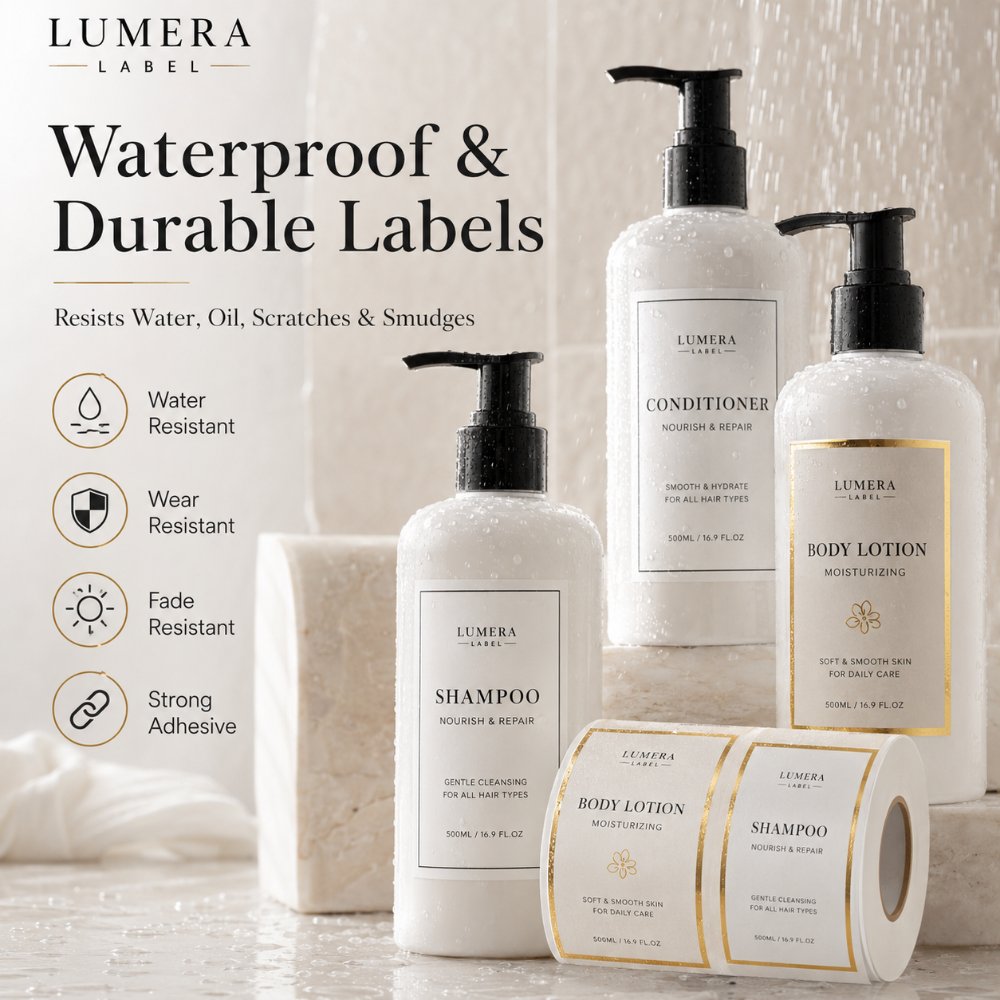
YY Labels lists self-adhesive labels for wash and body-care cosmetics. That product family provides a useful starting point for a multi-design sourcing request. The buyer must still confirm the offered material, printing scope, finish options and order allocation. A catalogue image does not establish that every pictured bottle, formulation or branded design is included in the label supply.
Official catalogue illustration of body-care bottles and label media, used as a cosmetic-label product reference.
Give each commercial variant a stable identity
Start with the variants your receiving and packing teams need to distinguish. A product name alone is often insufficient when a range includes different fragrances, formulas, pack sizes or destination-language designs. Assign a buyer-controlled SKU code to every separately ordered label version. Keep that code stable while the artwork is being revised; use a separate revision field for the file change.
Do not make the supplier infer the allocation from a folder of attractive artwork previews. Two files may look almost identical while one carries a different product name or net-content statement. Include a short human-readable description alongside the SKU code so that purchasing, the designer and the supplier can discuss the same item without relying only on thumbnails. If the commercial SKU has not yet been assigned, use a unique project reference and replace it through a documented change before approval.
Separate the product variant from the language version
A language variation should be visible in the matrix even when the label dimensions and visual theme stay the same. Record which market or language file belongs to each ordered line. This is an allocation instruction, not a claim that the file meets every local labeling rule. The buyer should nominate the person responsible for approving product statements and required text before asking the supplier to release the print version.
For example, a wash-product range might have one artwork for each product variant and a second language version for some variants. List the combinations actually being ordered, rather than multiplying every possible variant automatically. Mark unused combinations as outside the order. This avoids a quote that includes unnecessary versions and reduces the chance that a supplier prints a translated file that was supplied only for reference. Ask how the supplier will identify each version on proofs and delivery records.
Official catalogue illustration of body-care bottles, label rolls and loose label samples.
Supplier response matrix
Buying field
Requested supplier response
Buyer SKU and variant
Acknowledge the exact product and design combination being ordered.
Language or market file
Confirm the supplied language file and responsible text approver.
Artwork file and revision
Link each row to one controlled file and its proof reference.
Quantity by version
Quote the requested allocation and state the quoted unit.
Release status
Distinguish reference files from versions approved for this order.
Delivery identification
Explain how delivered labels will be matched to each matrix row.
Connect the matrix to the quotation
Add the requested quantity for each row and ask the supplier to confirm its quoted unit. Keep the total order quantity separate from each artwork quantity. A combined quantity across a range does not by itself tell you how the supplier prices smaller allocations, prepares different designs or packs the finished labels. Obtain a written response if the requested split affects the quotation or cannot be supplied as proposed.
Use the same row references in every quotation revision. When one SKU changes quantity, update that row and identify the changed quotation version. Do not quietly replace a spreadsheet while leaving the purchase order attached to an earlier total. A short reconciliation should show that the sum of the accepted row quantities matches the accepted order total. Any alternative split proposed by the supplier remains a proposal until purchasing accepts it.
Approve the complete version set without merging it
Ask for a proof reference against every ordered artwork row. A collection-level overview can help spot a missing SKU, but it should accompany the individual proof references rather than replace them. Record the exact file name, revision and approval status. Use clear states such as reference only, awaiting correction and approved for this order. Avoid naming a file simply ‘final’ when other files in the same folder are also called final.
Check the features that distinguish neighboring versions: product name, variant description, language, size statement and any buyer-supplied identifiers. The artwork owner should confirm the substantive text. Purchasing should confirm that the approved version is the one quoted and ordered. If the label design includes a finish, link to its separately approved specification instead of recreating the finish instructions in every row. This article concerns version allocation across the order; the finish and physical label specifications remain their own controlled references.
Keep receipt and application teams in the loop
Decide how the delivered labels will be distinguishable before accepting an otherwise complete quotation. Ask the supplier to describe the identification it can provide for each ordered version and how that identification relates to your matrix. The appropriate arrangement depends on the agreed supply format. Do not assume that a familiar-looking outer package identifies every design inside it.
Give your receiving team the accepted matrix and a usable approved preview for each SKU. The team should be able to distinguish an artwork mix-up from a quantity discrepancy without reconstructing the designer’s email history. If labels will be sent to a separate filling or packing partner, include that partner in the identification discussion. A supplier’s correct delivery to the buyer is only one part of the process; the labels still need to reach the correct product line and container variant.
Official catalogue presentation of pink and white body-care containers with decorative label samples.
Release changes at the affected row level
When one design changes after proof approval, identify the affected SKU and revision explicitly. Ask the supplier to confirm whether work on that version has started and what the proposed change would affect. Do not assume that an emailed correction automatically replaces a previously approved file or cancels work already undertaken. The commercial response and any revised release instruction should be recorded before production continues under the new version.
Keep unaffected rows visible and unchanged unless they also require a revision. This helps prevent a small text correction from accidentally reopening the entire range. Archive the superseded file as a reference and clearly remove its approval for new use. For a reorder, send the accepted version set again or reference the exact prior order and revisions; ‘same as last time’ is ambiguous when several variants have been updated at different dates.
Send a concise supplier handover
A useful handover combines the matrix, the controlled artwork files, approved proof references and the accepted quotation. Include a contact for artwork questions and a contact for commercial approval. Ask the supplier to acknowledge missing or contradictory information before accepting the release. This is more effective than sending a large collection of historical files and expecting the production team to choose the current versions.
Use the cosmetic-label product collection to identify the relevant product family, then request confirmation against your actual variant list. Keep the purchase decision focused on whether the supplier can supply and identify the required version set. Material suitability, label shape, application method and performance evidence should be confirmed through their appropriate specifications; a well-organized artwork matrix does not establish those properties by itself.
Include these references with the RFQ
The offered label reference and current specification.
The artwork version schedule and requested quantities.
The responsible artwork and commercial approvers.
Example request to the supplier
Please quote the cosmetic labels listed in the attached SKU matrix. Each row identifies a product variant, language file, artwork revision and requested quantity. Confirm the quoted unit, proof reference and proposed delivery identification for each version. Treat files marked reference only as outside the production release. Flag missing information or changes to the requested allocation before issuing the final quotation. No substitute artwork version is approved by this request.
Buyer FAQ
Can several cosmetic-label designs share one order?
Ask the supplier to confirm the actual design count and allocation it can quote. One combined order does not establish a common price, minimum quantity or delivery arrangement for every version.
Is one approval email enough for the whole range?
It can be clear if it identifies the exact matrix revision and all approved proof references. A broad approval without that version list leaves uncertainty about which files are released.
Who should approve translated product text?
The buyer should assign a responsible text approver and obtain any appropriate market-specific review. Supplier proof acknowledgment alone does not demonstrate that translated content meets local requirements.
Should a corrected file keep the same SKU?
Use your own commercial identification policy. The essential point is to distinguish the product identity from the artwork revision and to tell the supplier exactly which previous approval is replaced.
What should accompany a repeat label order?
Provide the accepted variant matrix, exact artwork revisions, requested quantities and any approved changes. Ask the supplier to confirm the referenced version set before accepting the repeat order.
wholesale cosmetic labelsB2B supplier sample record